

Objects That Shape the Way We Choose
A detail on a clasp.
A color combination that feels strangely confident.
Or simply a letter - repeated often enough to remain in memory.
For Roberta Tondini, founder of Studio Tondini, one of those early encounters came through a handbag her mother carried with particular affection.
The letter R.
Not just any R - but the one belonging to Roberta di Camerino, the Venetian fashion house founded by Giuliana Coen in the late 1940s.
Today, Roberta di Camerino is often remembered by collectors and historians rather than by the broader fashion public. Yet, Giuliana Coen revolutionised the language of the handbag long before the modern era of luxury branding.
Her designs were bold, theatrical, unmistakably Venetian. Velvet - a fabric rarely used in leather goods at the time - became one of her signatures. Her bags played with geometry and color in ways that felt closer to stage design than traditional accessory making.
And women noticed.
Among her admirers was Grace Kelly, who famously carried the sculptural Bagonghi bag, one of Roberta di Camerino’s most iconic creations.
We asked Roberta Tondini about the first time she remembers seeing those bags.
The Art of Choice: Do you remember when Roberta di Camerino first entered your world?
Roberta Tondini: “Yes - through my Mother, I was a small child. She had some of her bags, and she carried them with such pleasure. As a child, I was fascinated by the letter R in the hardware of one of them. It felt unusual. In fashion, you rarely saw that name or that initial.”
The attraction was almost instinctive.
The bags themselves felt confident, expressive, unmistakably personal.
Years later, Roberta would learn more about the woman behind them.
Giuliana Coen was not only a designer but also an entrepreneur navigating a fashion world that was rapidly changing in post-war Italy. She was known to be acquainted with Gabrielle Chanel, who reportedly reassured her when imitation inevitably followed success.
The advice was simple: if your designs are copied, it means you have created something worth copying.
Looking back today, that early fascination feels like a soft prelude.
Roberta Tondini herself has become an avid collector of handbags - more than 100 pieces spanning some of the most influential maisons in fashion. Among them sits a Bagonghi bag by Roberta di Camerino, part of her personal archive.
When asked whether that childhood encounter shaped Studio Tondini, Roberta pauses.
“I would never say it consciously inspired the brand. But certain things stay with you. Color, proportion, the courage to experiment with materials.”
The parallels are subtle but visible.
Roberta di Camerino was known for bold color combinations - often structured around four dominant tones.
Studio Tondini’s first line, the Livia Collection, also works through a dialogue of four leather colours, carefully balanced in composition.
Material exploration is another shared thread.
Where Giuliana Coen famously introduced Venetian velvet into handbag design, Studio Tondini explores contemporary alternatives - including innovative vegan materials - always searching for new expressions of craftsmanship.
And then there is Venice itself.
The city that shaped Roberta di Camerino also left its mark on Studio Tondini: the brand’s logo is inspired by an architectural detail found in the historic fabric of La Serenissima.
A quiet lineage, perhaps.
Sometimes, the beginning of a story is not a business plan.
Sometimes it is simply a letter.
Or a bag carried by someone you love.
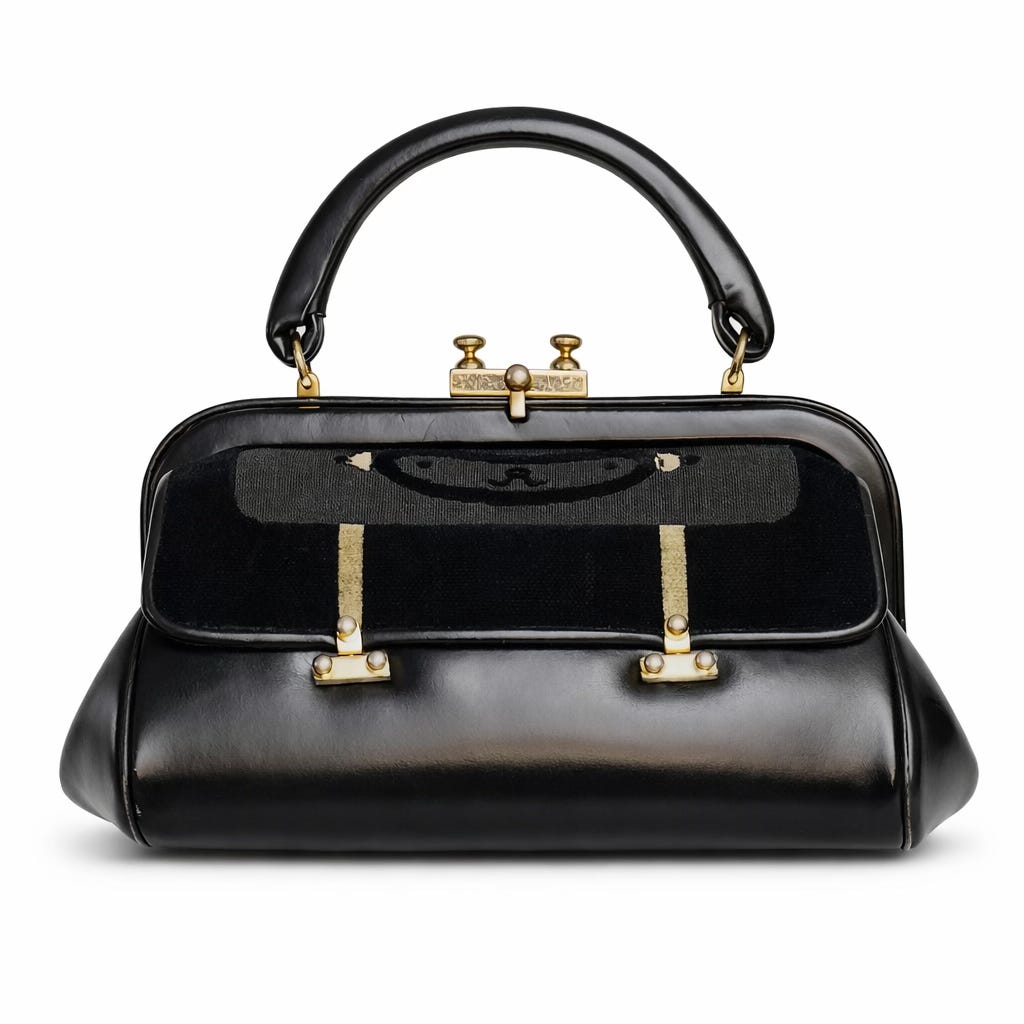
Image:
Roberta di Camerino Bagonghi bag from the personal collection of Roberta Tondini.
What object first shaped the way you choose?
We welcome your thoughts.