

In a culture shaped by immediacy and constant renewal, the act of pausing - of choosing with care - can feel quietly radical.
Our call is not to resist modernity, but to refine our relationship with it.
To choose with clarity, rather than compulsion.
Perhaps that is why choosing well feels increasingly so rare - and precious.
Because it asks us not only to determine what we want, but what that choice will make of us.
Will it undermine our values? What will it say about us? Can we live with it?
We often associate choice with freedom. A personal declaration.
And yet, as the world accelerates - offering too much choice or endlessly recycling the same choice options -, that freedom sometimes begins to feel like fatigue. Or even paralysis.
In her influential TED Talk, Sheena Iyengar, Professor at Columbia Business School, distills years of research into the hidden architecture of choice. Her work reveals that choice is, in fact, not a fixed paradigm: it is a lens shaped by context, culture, and expectation.
She shares a personal anecdote: requesting sugar for green tea in Japan - a gesture acceptable in one culture, dissonant in another - triggered not just surprise, but a cultural negotiation.
Her insight, beyond a layer of light irony, is clear: choice is not universal. And the same may be true across eras. What once felt liberating may, over time, begin to feel empty. Or irrelevant.
Moreover, a study co-authored by the same Iyengar, published in the Journal of Personality and Social Psychology, shows that when we are faced with too many similar options, our ability to choose declines - and so does our satisfaction.
This phenomenon, known as choice overload, suggests that more is not always better.
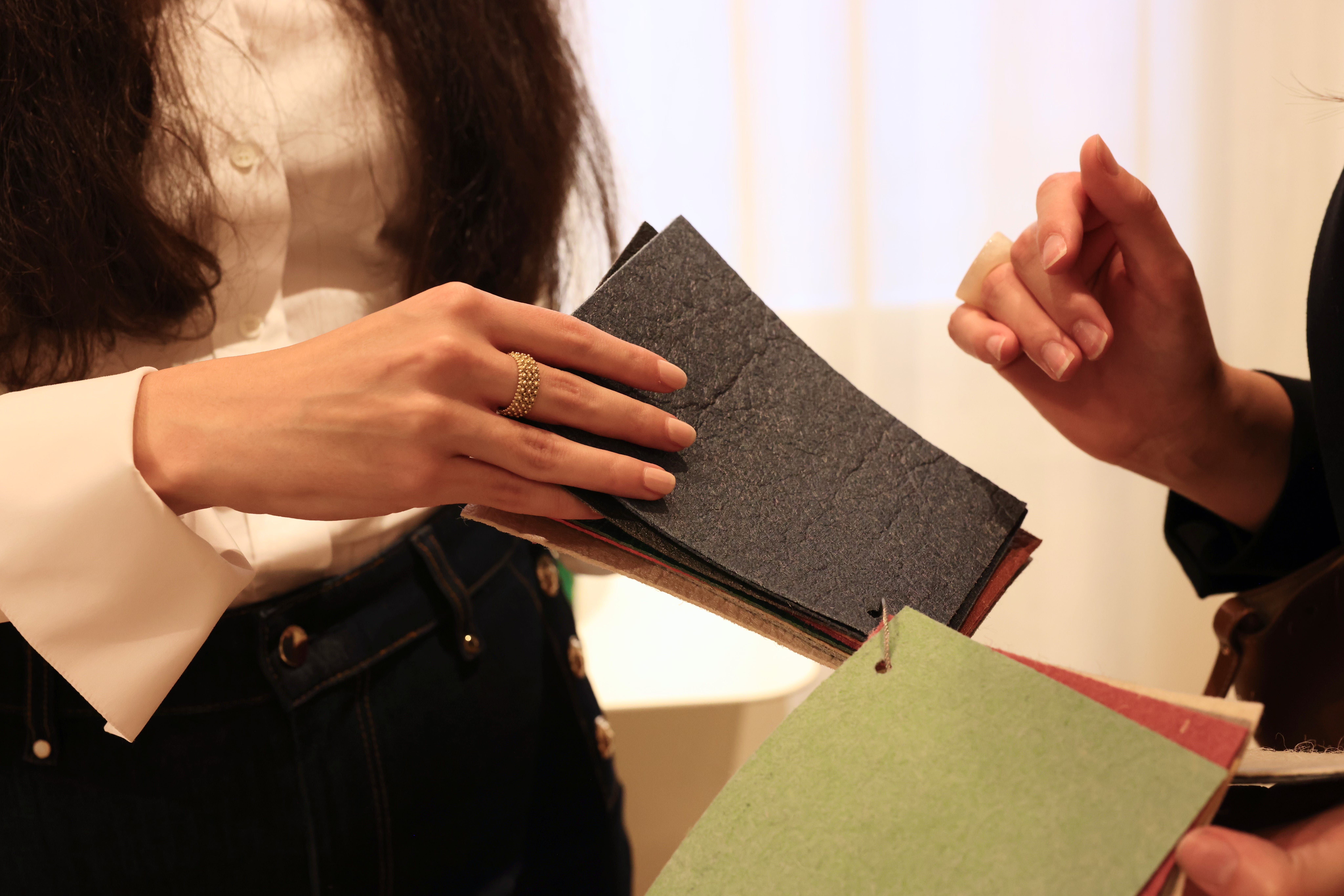
Beyond the Surface
To choose well, then, is not about maximizing possibilities.
It is about aligning decisions with what holds meaning.
And meaning is rarely immediate.
It reveals itself through:
Attention - the ability to investigate nuance;
Care - the strength to resist the automatic;
Durability - the instinct to choose what endures: in quality, form, or feeling.
A well-chosen object, path, or relationship does not unravel immediate applause. Rather, it unfolds itself over time - through a resonance echoing in the long run.
Ultimately, choosing well shall not be made of checklist, or borrowed tastes.
It shall be a way of living.
And it is the Studio Tondini way of living.
What if every choice you made today was the one you would carry with you for life?
What would you let go of?
What would you choose differently?
We welcome your thoughts.