

Trust used to be built slowly.
Today, we have access to more information than ever before, yet deciding what deserves our confidence has not necessarily become easier.
Paolo Provinciali has spent his career thinking about the forces behind those decisions. Through roles at some of the world’s most influential companies, he has observed marketing across very different industries and contexts. What interests him, however, goes beyond how products are sold. It is why people choose them in the first place - and the meaning, emotions, and trust that sit behind apparently rational decisions.
“People don’t buy products, they choose feelings” - Paolo Provinciali
The Art of Choice: Paolo, one of your recent articles asks a disarmingly simple question: Who do we trust now? It feels like a question that extends far beyond marketing. What first led you to reflect on trust as one of the defining themes of our time?
Paolo Provinciali: I started thinking about trust because I noticed how strange our choices had become.
We were choosing to believe an influencer on our phone over an institution with a century of scrutiny behind it, and choosing to accept an AI’s single confident answer over the slower work of checking it ourselves. Neither choice was really about better information. It was about convenience wearing the costume of authenticity.
In the piece, I traced two examples of this: creators, who now hold more consumer trust than brands but operate with far less accountability, and large language models such as ChatGPT, which give us one tidy answer pulled from a messy and uneven web, delivered with enough confidence that we stop asking where it came from. What struck me is that in both cases, we’re extending the most trust to the things that have earned it least.
That felt like it belonged in this space, because choosing well has always meant choosing who or what deserves your trust, and right now that instinct is being quietly eroded by ease.
Your career has taken you through some of the world’s most influential companies - from Google to AB InBev and now LinkedIn - each helping shape the way billions of people discover information, products, and ideas. As that journey continues, what has it taught you, not only about marketing, but about people?
Let me tell you a small secret from my years at AB InBev: most beers are not all that different from one another. What separates them isn’t the liquid, it’s the story a drinker tells themselves while holding the can. That’s the moment I really understood what marketing is for.
A genuinely new product can sell itself for a while on its own novelty, but that effect fades quickly, and what carries a brand after that is entirely a question of meaning.
People assume this logic only applies to something as common as beer, and that industries thought to be rational, such as B2B software buying, must work differently. I’ve found the opposite to be true. A B2B deal can involve a dozen stakeholders, months of negotiation, budgets large enough to define someone’s year, and a decision-maker whose own job is genuinely at risk if it goes wrong. That is not a rational environment. That is one of the most emotionally loaded environments there is.
Across Google, AB InBev, and now LinkedIn, the pattern has held steady in every room I’ve been in: people don’t buy products, they choose feelings. Peace of mind, confidence, belonging, standing among their peers. Understanding that has taught me more about people than it ever taught me about marketing.
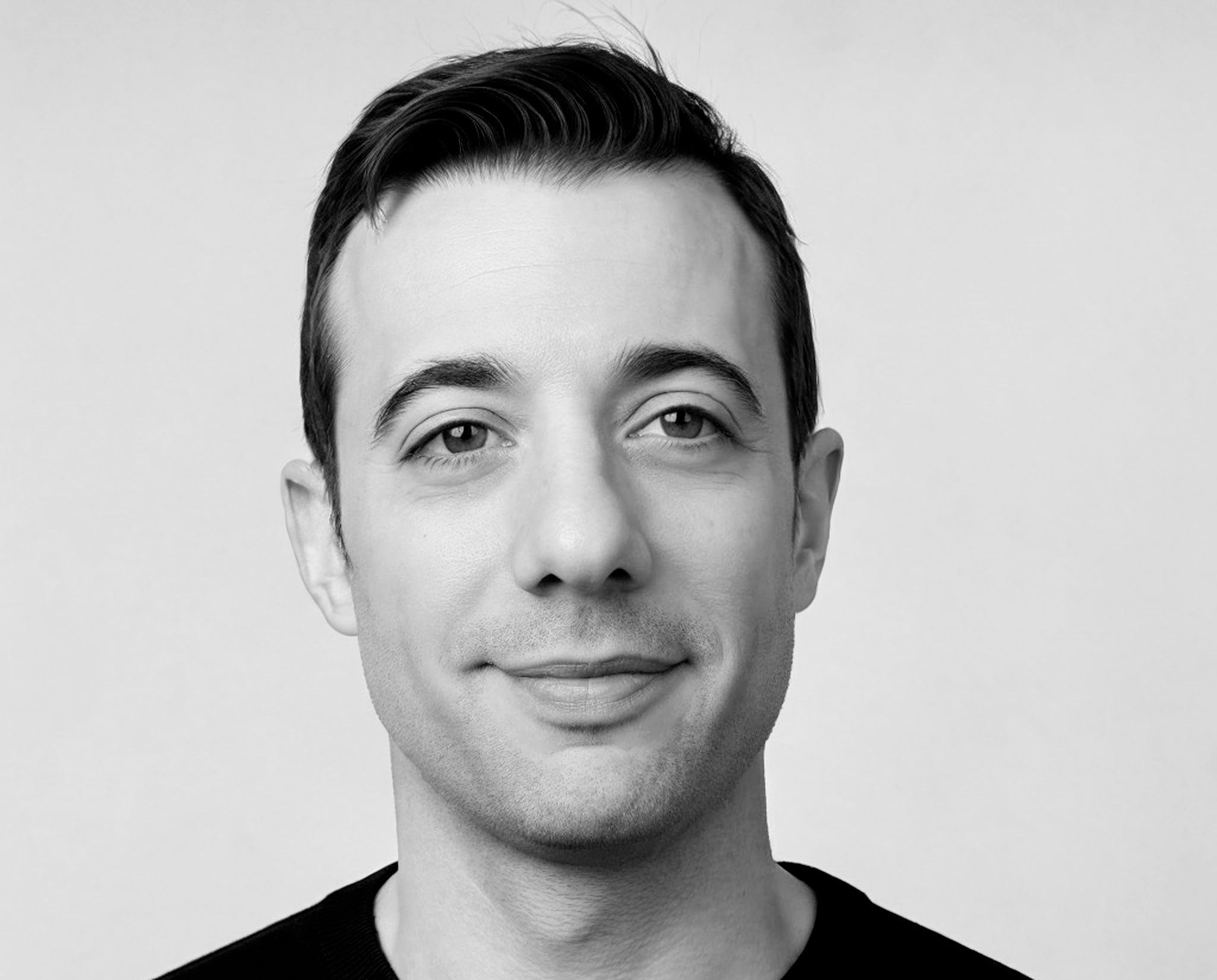
Image: Portrait of Paolo Provinciali, senior marketing expert. Courtesy of Paolo Provinciali.
Long before marketing became an industry, merchants, artisans, and makers relied on their reputation to earn people’s trust. In your view, what was marketing originally meant to achieve? Has its fundamental purpose changed, or only the way we practise it?
A friend of mine has a saying I think about often: “I can sell almost anything in the world, but only once.” Everything about marketing’s original purpose is contained in that sentence.
Before there was an industry around it, a merchant’s entire livelihood rested on whether the person walking away from their stall would choose to come back. That is not so different from what we now dress up in frameworks and call “brand promise,” it’s simply trust, made and either honored or broken, one transaction at a time. I don’t believe marketing’s fundamental purpose has changed. It has only been given better language.
The most basic question any of us should be answering is still the one an artisan answered without needing to name it: what job does this product or service does for the person choosing it, and will they be right to trust me again? What’s shifted is the distance between the promise and the consequence. A merchant’s reputation once traveled as far as a town’s memory. Ours now travels as far as the internet remembers, which is to say, forever. That should make the original instinct, earn it, keep it, deserve it, more urgent today than it has ever been, not less.
Today, brands compete not only for market share but for attention. Do you think good marketing should ultimately make choosing easier, or more conscious? And in a world where attention is increasingly scarce, is trust still the more valuable currency?
There’s a concept in marketing called mental and physical availability, meaning whether a brand comes to mind when someone needs that category, and whether they can easily find and buy it once it does. Attention is what makes the first half possible in a moment when it has never been scarcer.
But I think attention and choice get confused with each other far too often. Winning attention simply means a brand got noticed for a passing second among everything else competing for that same second, while winning the choice is a separate and much harder achievement, earned the same way a merchant earned it generations ago, by living up to what was promised once someone actually stopped to look closer.
That’s why I don’t see making choosing easier and making it more conscious as goals marketing has to pick between. A choice made with real confidence, where the doubt has already been resolved long before someone reaches for the product, tends to be both at once, informed enough to feel conscious and effortless enough to feel easy, because all the hard work of earning that confidence happened well before the moment of purchase arrived.
Once a brand has built that kind of trust, something shifts structurally, and it stops needing to win attention over and over, because it already lives in the customer’s mind before the competition even gets a chance to enter the room. That, to me, is the real answer to whether trust is still the more valuable currency. In a world this loud, trust has become the currency that eventually lets a brand stop paying the attention tax altogether.
Consumers have today access to more information than ever before, yet many feel less certain about what to believe. Has transparency become more important than persuasion? And can storytelling still create lasting value when it is not supported by genuine substance?
I don’t think transparency has replaced persuasion, I think it’s become the price of admission for it. People today aren’t short on options, they’re short on confidence in the options they have, and no amount of clever storytelling fixes that if there’s nothing true underneath it.
That’s the real test for whether storytelling still creates value: does it reveal something genuine, or does it just perform one. When it’s genuine, storytelling becomes the bridge between demand, which is Marketing’s job to create, and the sale, which is where that trust gets tested.
I think about this through my own life. I spent childhood summers in my grandfather’s wood workshop, restoring antiques by his side. I’ve never cared much for expensive designer clothing, it’s just not who I am. But tell me a bag or a pair of shoes was truly handmade by an artisan, in the same patient, hands-on tradition my grandfather worked in, and I’m no longer being sold an accessory. I’m being offered a way back to that workshop, and to a version of my own identity I didn’t know I could carry with me.
That’s what real substance does. It doesn’t just tell you a story, it hands you a piece of yourself. Strip the substance away, and all that’s left is a performance, and performances don’t hold up for long.
“Every real choice costs you something” - Paolo Provinciali
Artificial intelligence is changing the way brands communicate, create content, and interact with people. Which aspects of marketing do you believe should never be delegated to machines?
At its core, a large language model works by predicting the next most likely word, drawing from an enormous archive of everything humanity has already written, filmed, and said. Which means its output, however fluent, is always a distillation of the past. It’s very good at giving you the average of what’s been done. It will never be good at the thing that matters most in craftsmanship, or in marketing: the deliberate break from the norm.
Creativity lives in that break. So does real strategy, which has nothing to do with processing information and everything to do with looking at your own particular assets, your own position, your own history, and choosing a calculated risk that no one else in your position would make. That decision can’t be outsourced, because it isn’t really a decision about data. It’s a decision about identity.
In that sense, I think about AI the way I think about a well-made tool in a workshop: it doesn’t replace the hand of the craftsman, it extends what that hand can do. Today I can code, edit video, digest more data than I could read in a lifetime, and automate the tasks that used to consume my week, all without being an expert in any of it. But choosing the direction, deciding what’s actually worth making, remains entirely human. That’s not a limitation of the technology. That’s the whole point of it.
Becoming a parent often changes the way we think about the future. Has fatherhood influenced the way you think about responsibility - not only as a marketer, but as a person? And do you believe marketing can help build the kind of world you hope your daughter will inherit?
The two things that make someone genuinely good at marketing, I’ve come to believe, are the same two that make someone genuinely good at being a person: empathy, and the willingness to build a real connection instead of settling for a transaction.
I see the absence of both everywhere lately, in people who move through the world only asking what’s in it for them, and in brands that talk endlessly about what they’ve built without ever pausing to ask what anyone actually needs. Both paths lead to the same place, which is isolation, just at different scales.
Fatherhood has made that distinction feel less like a professional principle and more like the whole point. What I want most for my daughter is to grow into someone who meets people with empathy, who looks for what she shares with someone rather than what separates them, and who knows how to build something good together out of that.
I don’t think it’s naive to believe marketing has a role in the kind of world she inherits. At its best, marketing is just the discipline of listening closely enough to another person’s needs to actually meet them, practiced at scale, across millions of interactions a day. If more of us practiced it that way, with real empathy at the center instead of self-interest, I think the world she grows up in would look a little more like the one I’d want for her, and a little less like the one that sometimes worries me now.
“Choosing the direction, deciding what's actually worth making, remains entirely human.” - Paolo Provinciali
And finally: what does it mean, for you, to choose well?
To me, choosing well means choosing in a way you’ll never have to look back on with regret. It means knowing, clearly, what you actually want from a decision, and being honest with yourself about what you’re willing to give up to get it, because every real choice costs you something.
When I’m facing a real decision, I do something simple: I imagine myself a year down each road, and I ask how that version of me actually feels, not how the choice would look to someone watching from outside, but what it would feel like to be living inside it.
The question I keep coming back to is simple. What is the feeling I’m actually chasing, and will this choice genuinely give it to me, or just resemble it. Because so much of what we choose in life, a job, a partner, a bag, a beer, isn’t really about the object at all. It’s about the feeling we believe it will give us.
Choosing well, then, is really the discipline of being honest about that feeling before you commit to the path, rather than discovering the truth of it after you’ve already arrived.
To know more about Paolo’s work, visit:
Trust and choice both ask us to look beyond what attracts our attention first. Beyond the story, the appearance, or the confident answer. To ask what sits underneath - and whether it deserves what we are about to place in it.
Our time. Our confidence. Our money. Sometimes even something much more personal.
Paolo’s reflection leads us to an interesting reversal. Marketing is often understood as the art of persuading people to choose. But its truly noble role is to lead us to something worthy of our choice - and then to keep the promise behind that choice.
Maybe choosing well is rarely only about what is in front of us. It is also about understanding what we are really looking for.
What makes you trust something - or someone - enough to choose them?
We would be glad to read your thoughts.